Publisert 12. september 2023
How to store calcium chloride properly
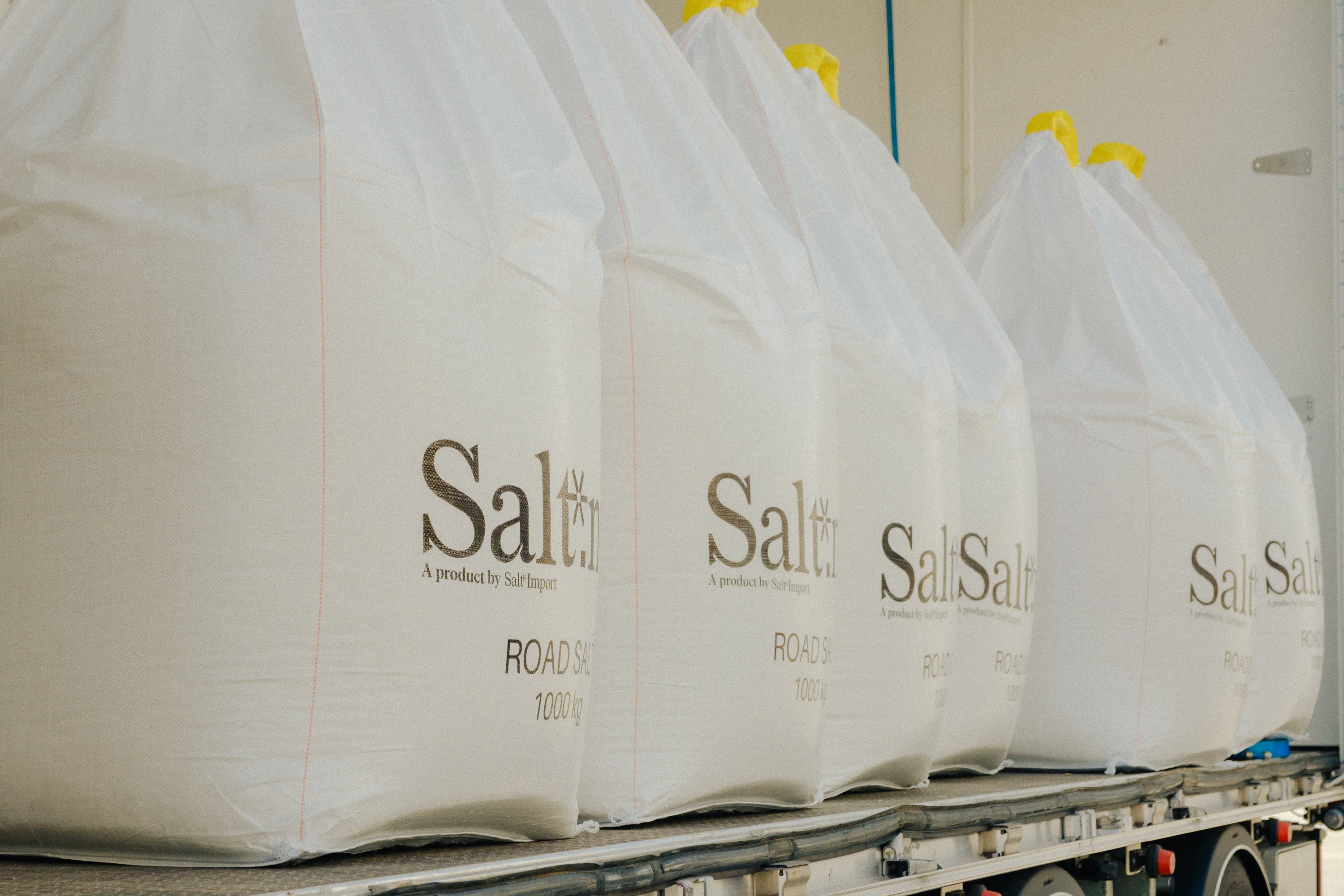
Store calcium chloride dry, preferably under cover. Our sacks are waterproof and can stand outside in the cold, but we recommend keeping them dry indoors so the quality holds as well as possible over time. Keep the product out of direct sunlight too.
If you have opened a big bag, use it up so the product does not draw in moisture and turn hard and lumpy. If you do have to store it for a while, try to seal the bag against moisture, but avoid long-term storage.
Lumps in the bag?
Calcium chloride can still be used when lumps have formed. A good trick is to lift the bag one metre off the ground with a forklift and drop it onto a hard surface. That can help break up the lumps. If one or more bags contain a very large lump, you can dissolve it in water and spread the product as a liquid.
Which suits best, a big bag or a 25 kilo sack?
- A big bag is the right choice when large areas are treated with a spreader or machine, and it costs less per kilo than small sacks, but the whole bag should be used once it is opened
- A 25 kg sack suits smaller areas and is easier to handle, and in winter it works very well for melting ice when the temperature is below minus 5 degrees
How calcium chloride keeps dust down in summer
In spring and summer, spread calcium chloride when the ground or gravel is damp, ideally right after rain. You can also spread the product and dampen it afterwards, but we recommend a damp surface before spreading. The chlorides in the salt absorb moisture, which is exactly why the salt works so well for dust suppression and road maintenance, in summer and winter alike.
Winter use down to minus 40 degrees
Calcium chloride works down to minus 40 degrees and removes thick layers of ice in a very short time. It is widely used on pavements, in back yards, on steps and at entrances, and on paving slabs, slate and other surfaces that need gentler treatment than ordinary road salt gives.
The right dosage on roads
We recommend 800 kilograms of calcium chloride per kilometre of road, based on a road five metres wide. Use a spreader on longer stretches, and we recommend one on shorter stretches too, so the product is distributed evenly across the carriageway. Calcium chloride has a density of 0.835 grams per cubic centimetre.
Have questions about calcium chloride? Get in touch and we will answer whatever you are wondering about.