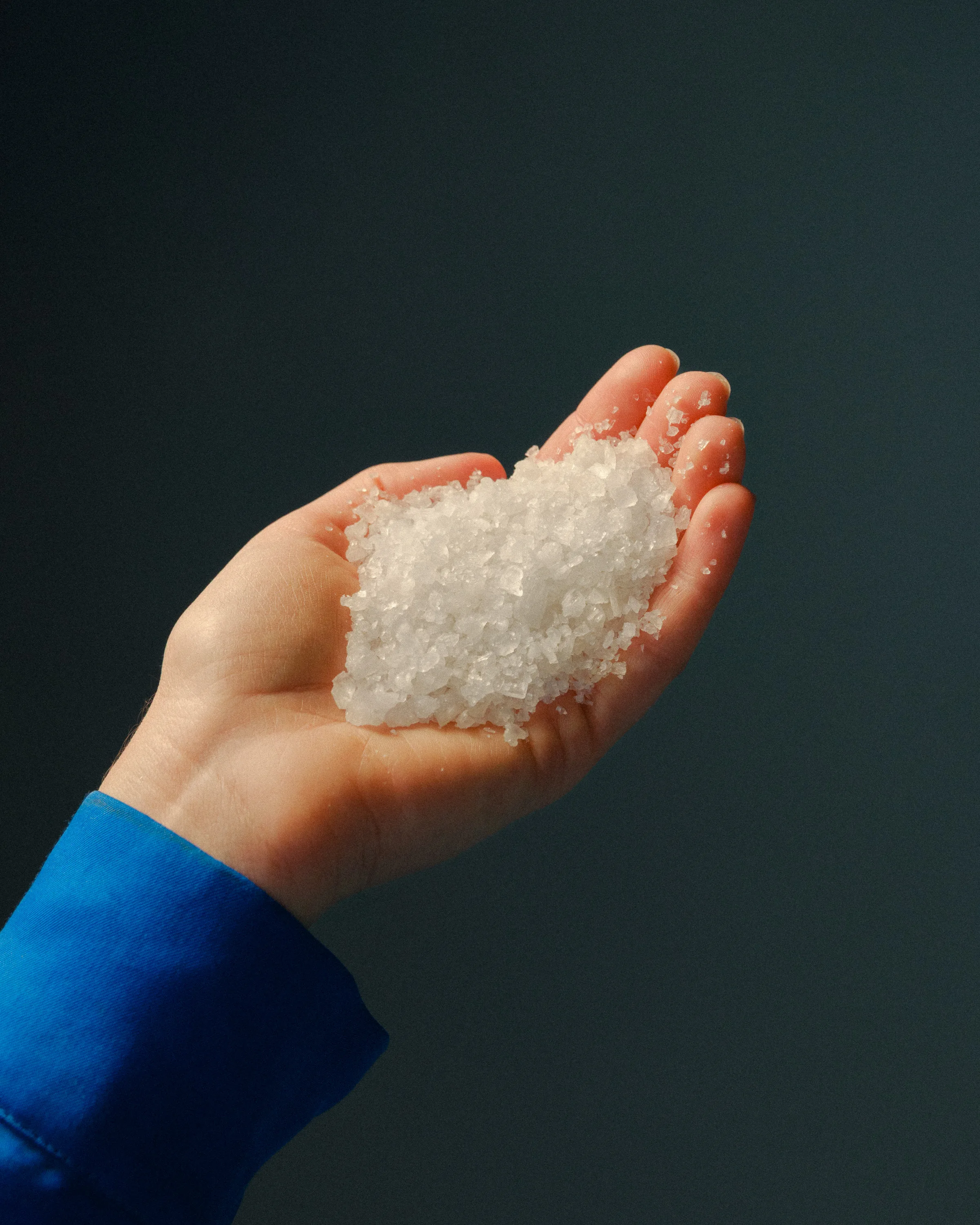
Sodium controls several of the body's basic functions
Salt gives the body sodium, which is needed to maintain fluid balance and acid-base balance. Sodium is also essential for nerve signals to be transmitted and muscles to contract.
What happens with too little salt?
A lack of sodium can cause a dry mouth, nausea, headache, fatigue and muscle cramps. The risk increases with heavy sweating or diarrhoea, and people with diabetes or kidney disease are especially vulnerable.
What happens with too much salt?
A high salt intake over time is linked to an increased risk of high blood pressure, cardiovascular disease and stroke. In rare cases, acute salt poisoning can be fatal.
The body needs salt to function, but the amount decides whether it helps or becomes a burden.
How much salt should we eat?
The Norwegian Directorate of Health recommends a maximum daily intake of five grams of salt, roughly one teaspoon. Surveys show that most Norwegians eat twice that. Much of it does not come from the salt shaker on the kitchen table.
About three quarters of salt intake comes from ready meals and semi-prepared foods
Store-bought bread often contains three times as much salt as homemade bread
Conscious choices in the shop and in the kitchen can reduce intake considerably